
Porcelain Fixed Bridges
Cosmetic Dentistry
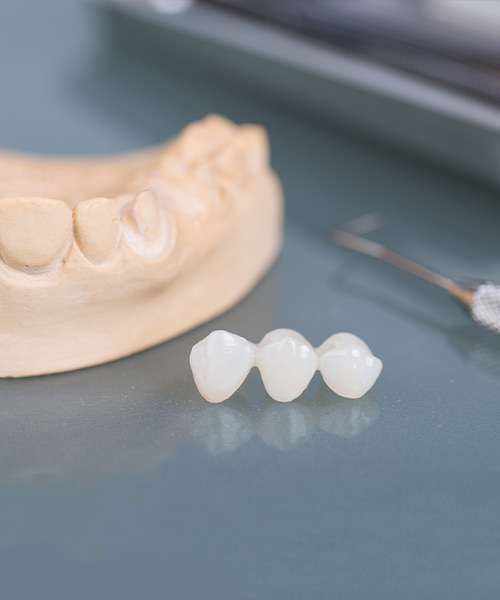
A porcelain fixed bridge is a device used to fill the space where a tooth once was. A typical bridge that replaces one missing tooth consists of a fake tooth (pontic) hung between two crowns placed on the teeth on either side of the space. It is cemented in place and is not removed. You brush and clean around it like your natural teeth. Without a bridge, gaps in the mouth where natural teeth are missing can cause multiple teeth to shift, biting and/or jaw problems, and periodontal disease. Bridges safeguard the integrity of existing teeth and help maintain a healthy, vibrant smile.
Creating Porcelain Fixed Bridges
Porcelain fixed bridges usually require two trips to the dentist’s office. Following are the steps typically involved in the first visit:
- The surrounding teeth are numbed with a local anesthetic.
- Dr. Fienman will prepare the surrounding teeth by cleaning any plaque or decay that remains and reducing them so that the crowns can be fitted.
- Dr. Fienman makes a mold of the teeth or takes a digital scan of the teeth. This information is sent to the local Michigan dental lab where they will construct your new bridge.
- You leave the office with a temporary bridge in place to protect your teeth and keep them from shifting until your final bridge is returned from the lab for cementation.
The second visit is relatively brief and usually requires no anesthetic at all. At that time, we will remove the temporary bridge and fit your final bridge. We will then make any necessary adjustments and cement the dental bridge in place so you may return to eating normally by the end of the day.
If the missing tooth space has no surrounding teeth, Dr. Fienman may recommend a dental implant as the most appropriate method of treatment. Our first thought when replacing teeth is always a dental implant.
Proper Dental Bridge Maintenance
It is important to remember that your natural teeth hold up the porcelain-fixed bridge. The natural teeth underneath can still get cavities or require root canal therapy, and you may still end up with gum disease for related or unrelated reasons.
There is more maintenance involved with a bridge because the pontic and crowns are constructed as a single piece. Special floss and other devices are often necessary to clean underneath the teeth and maintain strong, healthy gums. With proper dental care, porcelain-fixed bridges can last for years.
Frequently Asked Questions About Porcelain Fixed Bridges
What is a dental bridge?
A dental bridge is a custom restoration that replaces one or more missing teeth by anchoring to the healthy teeth on either side of the gap. The replacement teeth, called pontics, are crafted from porcelain to match the look of natural teeth.
How many teeth can a fixed bridge replace?
A fixed bridge most commonly replaces one to three missing teeth in a row. For larger gaps, dental implants or a combination of bridges and implants may be a better fit. Dr. Fienman will work with you to better understand which option is right for your situation.
What is the procedure for getting a dental bridge?
The process for a porcelain bridge is similar to the process for a crown. If the tooth is already missing it is placed over two visits at our West Bloomfield office:
- The teeth on either side of the gap are gently shaped to support the bridge
- A digital scan or impression is taken
- A temporary bridge is placed while the permanent one is crafted
- At the second visit, the permanent bridge is checked for fit, color, and bite
- The permanent bridge is bonded into place
Why is porcelain a good material for a dental bridge?
Porcelain closely resembles natural tooth enamel, so the bridge blends with the rest of the smile. It is also strong, stain-resistant, and well tolerated by gum tissue, which makes it a reliable choice for long-term use.
How long does a porcelain bridge last?
A porcelain bridge typically lasts 10 to 15 years and often longer with good care. Brushing, flossing under the bridge with a floss threader or water flosser, and keeping up with routine cleanings all help protect both the bridge and the supporting teeth.